



A practical read for grocery and retail stockers
The Bottom Shelf Is Not One Trip Down. It Is Twenty.
Why a floor pad, a full sleeve, and a compact strap are not the same kind of work gear.
By the LiftPoint team · October 2026
I had one case of canned vegetables open on the floor, three rows left to fill, and a cart parked halfway down the aisle.
I was crouched at the bottom shelf, getting the labels to face the same way. Then I noticed the next section was missing a price tag. So I stood up, grabbed the scanner, checked the item, and crouched right back down.
I still had six bottom sections to go. And I knew exactly how the next hour was going to look.
Free US shipping · 60-day money-back guarantee
The lower shelf is never just one trip down.
Down to the shelf. Back up to the cart. Down again. Move three feet. Repeat.
You learn how to open a case without destroying the cardboard. You learn which products roll if you set them down wrong. And you learn that the bottom shelves are never just one trip down.
They're twenty little trips. Sometimes fifty. You don't really count them until you start noticing how often you're getting back up.
The work is already physical. The gear should not become another job.
Sometimes I'd kneel on a flattened box if I was staying in one spot long enough. Sometimes I'd bring a foam pad over. Both make sense when you're working on the floor for a while.
But stocking doesn't always happen that way. You crouch to put away four items, stand to grab another case, move to the next section, then get right back down. A pad is useful when you're kneeling on it. It doesn't come along when you're standing, walking, and crouching somewhere else.
I looked at knee sleeves too. What kept stopping me was the amount of material. I already had work pants, a cutter, keys and a scanner. I wasn't excited about adding another big piece of gear to a normal shift.
Different tools. Different moments.

Quick fit
- Find the soft spot below the kneecap.
- Center the pad there.
- Close the strap snugly, not tight enough to tingle.
Good to know
Not a kneeling pad. For direct floor contact, use a proper kneeling pad.
Current terms
Free US shipping · 60-day money-back guarantee
“Knee gear” is not one category.
One night I caught myself standing up for a case that was right there on the cart, then crouching straight back down. I actually laughed. This job has enough little things to keep track of. I didn't want my knee gear becoming another one.
That changed what I was looking for. I wasn't trying to find something to kneel on anymore. I already had that. And I wasn't necessarily looking for a full brace either. I wanted something smaller I could wear during the constant crouch-and-stand parts of the shift.
One strap. One contoured pad. Nothing wrapping the entire joint.
Free US shipping · 60-day money-back guarantee
What LiftPoint actually is.
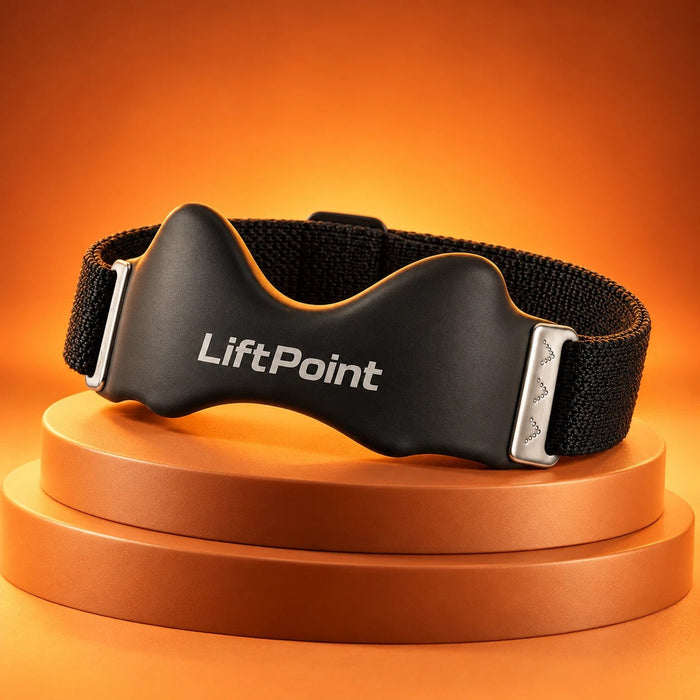
LiftPoint is a narrow adjustable strap with one firm, contoured pad. The pad sits just below the kneecap, not over it. The strap closes with hook-and-loop, there's silicone grip on the inside, and there's no sleeve to pull up or frame to position.
- Slim adjustable strap
- One firm contoured silicone pad
- Sits just below the kneecap
- Adjustable hook-and-loop closure
- Silicone grip on the inside
- No full sleeve or hinged frame
- Designed to fit under work pants
How to put it on
- Find the soft spot below the kneecap.
- Center the pad there.
- Wrap the strap and close it snugly, not tight enough to tingle.
What a strap is not for.
LiftPoint is not a kneeling pad. If you need direct protection from a concrete floor, use a proper kneeling pad. A strap and a pad are different tools for different parts of the job.
The details most workers check first.
Where does it go?
Is it a full knee brace?
Can I wear it under work pants?
Is it for kneeling directly on concrete?
Will it fit me?
What if it is not for me?
How does shipping work?
Read the fit details. Then decide for your own shift.
Buy 1, Get 1 Free
Check Current LiftPoint Details →Free US shipping · 60-day money-back guarantee
LiftPoint is a support strap, not a medical treatment. For ongoing or severe knee symptoms, talk with an appropriate healthcare professional.